Choosing the best China Miniature Circuit Breaker suppliers requires more than comparing catalog prices. A reliable supplier should demonstrate tested products, stable production, and practical application experience. The market is expanding as buildings, factories, solar systems, and data centers demand safer low-voltage protection.
According to Grand View Research, the global circuit breaker market was valued at approximately USD 7.6 billion in 2023. Its report expects continued growth through 2030, supported by grid upgrades and industrial electrification. The International Energy Agency also reported strong global electricity-demand growth in its Electricity 2024 analysis. These trends increase demand for compact protection devices, including the Miniatrue Circuit Breaker.
Standards matter greatly. Buyers should verify compliance with IEC 60898-1 for household and similar installations, or IEC 60947-2 for industrial applications. Certification documents should match the exact model, rated current, breaking capacity, and production site. A supplier’s factory audit can reveal details that brochures hide, such as terminal quality, assembly discipline, and sample traceability.
Real performance depends on more than a test certificate.
Top China suppliers usually provide thermal-magnetic trip curves, short-circuit test evidence, incoming inspection records, and aging-test procedures. They should explain whether a 6 kA or 10 kA breaking capacity suits the intended installation. Independent reports from organizations such as TÜV Rheinland, SGS, or Intertek can strengthen confidence, but their scope must be checked carefully.
No supplier is perfect. Some online rankings rely on unclear sampling or outdated information. This guide therefore compares technical capability, certification reliability, manufacturing consistency, customization support, and after-sales responsiveness. The best choice is not always the cheapest factory. It is the supplier that can prove dependable protection under real operating conditions.

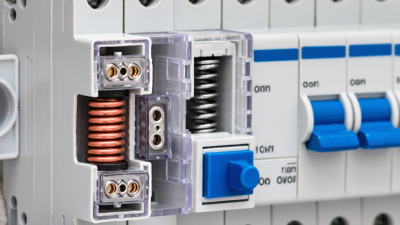
A miniature circuit breaker protects low-voltage circuits from overloads and short circuits. It automatically opens when current rises beyond a safe level. Unlike a fuse, it can usually be reset after the fault is removed. Its compact body fits distribution boards, control cabinets, and residential panels.
Small device. Serious responsibility.
Supplier choice matters because an MCB must trip consistently, not merely look well finished. Reliable manufacturers control contact materials, thermal elements, arc chambers, and production tolerances. They should provide clear ratings for current, voltage, breaking capacity, poles, and tripping curves. Independent testing and traceable inspection records add confidence. Compliance with relevant regional standards also needs verification for the target market.
The best China MCB suppliers usually combine stable engineering with responsive technical support. Ask for sample test reports, factory quality procedures, and evidence of batch testing. Check whether the supplier can explain temperature derating and coordination with upstream protection. A low quotation may hide weaker materials or inconsistent calibration. It is easy to focus on price. That can be a mistake. No supplier is perfect, and documents can still be misunderstood. A careful buyer should compare real samples, installation conditions, warranty terms, and delivery history before selecting a long-term partner.
The best China miniature circuit breaker suppliers show compliance with the standards used in their target market. IEC 60898-1 covers household MCBs up to 440 V AC, 125 A, and 25 kA short-circuit capacity. GB/T 10963.1 provides China’s corresponding framework. For industrial panels, IEC 60947-2 is more suitable because it addresses wider operating duties and verified breaking performance.
A reliable supplier should provide type-test reports, calibration records, and traceable production batches. I check thermal and magnetic trip curves, insulation voltage, temperature-rise results, and endurance cycles. The International Energy Agency’s Electricity 2024 report expects global electricity demand to grow by about 4% in 2024 and 2025. More electrical loads make dependable protection less optional. However, market growth does not prove product quality. A factory may pass one test and still show weak screw torque control or inconsistent contact materials. That is where supplier audits matter. Request samples from three batches, then compare trip times at 1.13, 1.45, and 2.55 times rated current. These checks expose variation. UL 489 may also be required for North American installations, while IEC 60898-1 may not cover every application. I would not accept a laboratory logo without confirming accreditation, test scope, and report validity. My judgment can still be incomplete; field failure data is often harder to obtain than certificates.
Comparing China MCB suppliers requires more than checking price, catalog size, or polished factory photos. The International Energy Agency’s Electricity 2024 report forecasts global electricity demand will grow by about 4% in 2024. That growth increases pressure on suppliers to deliver stable protection devices, not simply more units. A capable supplier should provide test records for rated current, tripping performance, insulation, temperature rise, and short-circuit capacity. IEC 60898-1 and IEC 60947-2 offer useful reference points for these checks.
Look closely at the details. A 6 kA breaker is not automatically better than a 4.5 kA model; the correct rating depends on the installation’s prospective fault current. Request production samples, batch traceability, calibrated laboratory equipment, and aging-test results. Check whether the supplier controls key parts, such as contacts, springs, terminals, and thermal elements. Ask for repeated test data, not one attractive report. Factory audits should include incoming inspection, torque checks, automated assembly records, and final functional testing. ISO 9001 certification supports process control, but it does not prove every MCB performs well. That distinction is often missed.
Capability also appears in response quality. Can the engineering team explain tripping curves clearly? Can it adjust an enclosure, terminal design, or auxiliary contact without weakening safety? Export experience matters, but paperwork alone is not evidence. I would compare failure rates, complaint handling, lead-time stability, and sample consistency over several orders. One sample can lie. Supplier comparison is never perfectly clean.
Buyers should examine how a China miniature circuit breaker supplier controls production, not merely compare catalog prices. The IEA’s Electricity 2024 report expects global electricity demand to grow by about 4% annually through 2026. That pressure increases the need for stable protection devices. Ask for process records covering copper alloy stamping, contact riveting, spring-force checks, and terminal torque. Components should carry batch identification. Traceability matters.
Testing must follow IEC 60898-1, with clear limits for thermal tripping, magnetic tripping, dielectric strength, temperature rise, and short-circuit performance. Request recent test reports, not promotional claims. A credible supplier should use calibrated instruments and independent laboratories accredited to ISO/IEC 17025. Review calibration dates carefully. Inspect whether samples come from normal production or specially prepared lots. This detail is often overlooked. Factory audits should compare incoming-material records with final inspection data. Statistical process control can reveal drift before failures appear, while endurance testing shows whether mechanisms remain reliable after repeated operations. Still, paperwork is not proof. I would also open random finished units and examine contact alignment, arc-chute condition, insulation barriers, and screw threads. No supplier is perfect; inconsistent sampling or rushed audits can create false confidence. Require corrective-action records when test results fail, and verify that later batches actually improved.
Choosing a China miniature circuit breaker supplier requires more than comparing prices. Buyers should verify certification documents against the exact product model, rated current, and voltage. A certificate covering another series is not enough. Check the issuing laboratory, test standard, expiry date, and factory address. For household applications, IEC 60898-1 may apply, while industrial projects often require IEC 60947-2. Ask for recent test reports, not only scanned certificates.
Customization also needs technical discipline. Confirm whether the supplier can adjust trip curves, terminal design, pole configuration, labeling, or packaging without changing safety performance. Request samples from the proposed production line. Test them under realistic conditions, including repeated switching, temperature rise, insulation resistance, and terminal torque. Small details matter. A printed logo is easy; stable electrical performance is harder. I once saw a specification accepted too quickly because the sample looked excellent, while its accessory fit was inconsistent.
After-sales support should be measurable. Ask about warranty duration, complaint response time, spare-part availability, and failure-analysis procedures. Reliable suppliers can provide batch records, inspection reports, and a clear replacement process. Speak with the technical team, not only a sales representative. Their answers reveal practical experience. Still, no supplier is perfect. Buyers should document assumptions, retain approval samples, and schedule periodic audits after mass production begins. Doing this may feel cautious, but it prevents expensive surprises in the panel room.