Leave Your Message

How to Choose the Right Arc Chute for Your Application?

Choosing the right Arc Chute begins with understanding the electrical conditions inside the switchgear. An Arc Chute is not merely a row of insulating plates. It controls, cools, and splits the arc created when contacts separate. The wrong design may overheat, erode quickly, or fail to extinguish the arc safely.

Ruben D. Garzon, a recognized circuit-breaker author and specialist, offers a useful reminder: “Circuit interruption is a complex phenomenon.” That principle should guide every selection. Check the system voltage, continuous current, prospective short-circuit current, contact spacing, and switching frequency. Then review the Arc Chute’s plate material, chamber dimensions, venting path, and thermal capability. A dusty factory, humid enclosure, or compact motor starter can change the decision. Small details matter.

Do not choose by appearance alone.

A longer Arc Chute may provide better arc control, but it can create installation and cooling constraints. A compact model may fit perfectly, yet offer limited interruption performance. Manufacturer test data, product coordination, and applicable electrical standards should support the final choice. Field experience also helps. Inspecting carbon deposits, plate erosion, and discoloration can reveal problems that a catalogue cannot show.

There is no universal Arc Chute. That is the uncomfortable part. Selection often involves compromises between cost, space, durability, and safety. Even experienced engineers can underestimate real switching conditions. Careful verification is therefore essential before approval, production, or replacement.
How to Choose the Right Arc Chute for Your Application?

Define the Arc Chute’s Role in Your Electrical Protection System

Define the Arc Chute’s Role in Your Electrical Protection System

An arc chute is not merely a replacement part. It controls and extinguishes the arc formed when a circuit breaker opens under fault conditions. Its plates split, cool, and deionize the arc. This protects contacts and limits damage inside the enclosure. NFPA’s Electrical Fires report estimates that electrical distribution and lighting equipment caused about 32,650 home structure fires annually from 2015 to 2019. The figure shows why interruption performance deserves careful attention, even outside industrial facilities.

Choose the arc chute only after defining the breaker’s duty. Check rated voltage, continuous current, prospective short-circuit current, interrupting time, and operating frequency. Also review enclosure size, ventilation, pollution, altitude, and expected switching cycles. IEC 60947-2 requires low-voltage circuit breakers to meet defined short-circuit and performance conditions. IEEE 1584-2018 also shows that incident energy depends on system voltage, fault current, clearing time, and working distance. A suitable arc chute supports the complete protection scheme. It cannot correct poor coordination or an incorrectly rated breaker.

Tips: Match the chute to the exact breaker frame and trip unit. Verify test records and temperature limits. Inspect for cracked plates, soot, or warped separators. Do not assume a visually similar part performs equally. Field conditions are often less predictable than laboratory tests. My practical concern is simple: many selection errors begin with catalog dimensions, not fault calculations. That shortcut needs reconsideration.
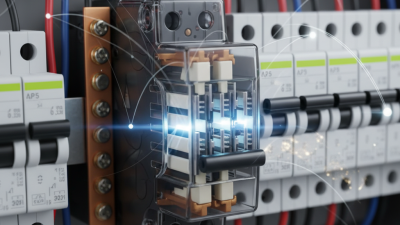
Match the Arc Chute to Voltage, Current, and Fault Conditions

How to Choose the Right Arc Chute for Your Application?

Match the Arc Chute to Voltage, Current, and Fault Conditions

Choosing an arc chute begins with the circuit voltage, not the enclosure size. The chute must withstand the system’s maximum voltage during switching. Higher voltage usually requires longer arc paths, stronger insulation, or additional plate spacing. Arc length matters.

Normal current is equally important. A chute designed for a small contactor may overheat when used in a higher-duty circuit. Check continuous current, switching frequency, load type, and expected temperature rise. Motors, heaters, and capacitive loads can create very different arc energy. Do not guess.

Fault conditions demand closer attention. Review the prospective short-circuit current and the device’s interrupting rating. The arc chute must control the energy released when contacts separate under abnormal conditions. For DC applications, polarity and magnetic arc-blowout direction can also affect performance. An AC solution may not transfer safely to DC.

A practical selection process includes checking certified test data, installation clearances, ventilation, altitude, and contamination levels. Inspect the chute for cracked plates, carbon deposits, loose hardware, or blocked exhaust paths. Small damage can change arc movement. Incomplete application data is common, and that is where mistakes begin. If the fault level or duty cycle is uncertain, pause and obtain verified system measurements before choosing a replacement. A mechanically compatible part is not automatically electrically suitable.

Evaluate Materials, Size, and Arc-Extinguishing Performance

How to Choose the Right Arc Chute for Your Application?

Material choice directly affects arc-chute life, cooling, and insulation stability. Steel plates withstand heat well, while polymer barriers improve insulation and reduce weight. However, material alone does not guarantee safe interruption. Check temperature ratings, tracking resistance, and resistance to repeated thermal cycling. IEC 60947-2 requires circuit-breakers to prove performance under declared short-circuit conditions. Your arc chute must match those tested conditions, not only the panel’s voltage label.

Size must follow the breaker’s current, voltage, pole spacing, and available fault current. A compact chute may fit easily but restrict arc expansion and gas movement. An oversized design can create installation gaps or disturb magnetic field control. Laboratory data should show interruption time, peak arc voltage, dielectric recovery, and endurance cycles. These figures reveal real arc-extinguishing performance. Field experience suggests that dust, moisture, and loose connections can reduce performance significantly. That detail is often underestimated.

Tips: Compare test reports under the same fault-current and power-factor conditions. Inspect vents for blockage. Allow clearance for hot gases. Do not replace a tested chute with a visually similar part. IEC 60947-2 and NFPA 70E guidance support documented verification, but neither removes the need for application-specific engineering review. A perfect choice is unlikely. Recheck the design after maintenance history, ambient temperature, or system fault levels change.

Check Compatibility with the Circuit Breaker and Installation Space

How to Choose the Right Arc Chute for Your Application?

Compatibility starts with the circuit breaker, not the arc chute alone. Confirm the breaker’s frame, pole count, rated voltage, continuous current, and interrupting capacity. IEC 60947-2 defines these ratings as coordinated performance requirements. A chute with the wrong internal geometry can interrupt poorly, even when its dimensions appear correct. Check the manufacturer’s technical drawing, terminal arrangement, mounting points, and replacement instructions. A clean mechanical fit is not proof of electrical compatibility.

Installation space also affects arc control. Measure enclosure depth, ventilation paths, cable bending radius, and the clearance above exhaust openings. IEEE 1584-2018 considers enclosure size, electrode gap, working distance, and fault current in arc-flash calculations. These details can change incident-energy estimates. NFPA 70E 2024 requires an electrically safe work condition unless justified exceptions apply. Do not treat a compact enclosure as automatically safer. That assumption deserves review.

Tips: Record the original chute’s dimensions before ordering. Compare creepage and clearance distances. Check heat marks, cracks, and carbon deposits. Verify the available fault current against the breaker’s interrupting rating. Leave space for inspection and cleaning. If the drawing is unclear, stop and request engineering confirmation. Small gaps can matter. Local temperature, dust, and repeated switching may also shorten service life. A practical selection should consider these conditions, not only catalog numbers.

How to Choose the Right Arc Chute for Your Application? - Check Compatibility with the Circuit Breaker and Installation Space
Breaker Application Typical System Voltage Typical Current Range Breaker Configuration Arc Chute Compatibility Requirements Typical Installation Space Cooling and Ventilation Selection Result
Low-voltage miniature circuit breaker 120–240 V AC 6–63 A 1–4 poles; DIN-rail mounted Use the chute specified for the exact breaker housing, pole spacing, terminal arrangement, and short-circuit rating. Usually limited to the breaker enclosure; preserve the manufacturer-specified clearance above and beside the device. Keep arc-gas outlets unobstructed; do not cover ventilation openings with wiring or accessories. Suitable with exact fit
Low-voltage molded-case circuit breaker 240–690 V AC 63–800 A 2–4 poles; fixed, plug-in, or withdrawable Match the chute to the breaker frame size, pole pitch, phase barriers, mounting points, and interrupting capacity. Allow space for the breaker body, arc-gas path, cable bending radius, and service access. Provide an unobstructed exhaust path; install barriers where hot gases could reach adjacent equipment. Suitable with exact fit
Air circuit breaker 380–690 V AC 800–6,300 A 3–4 poles; fixed or draw-out construction Use a dedicated arc chute matched to the contact system, frame size, pole assembly, and rated short-circuit performance. Requires substantial vertical and front clearance for arc chutes, draw-out movement, inspection, and maintenance. Follow the switchboard ventilation design; never block the arc chute exhaust or pressure-relief route. Dedicated chute required
DC circuit breaker 125–1,500 V DC 10–1,600 A 1–4 poles; series or polarity-specific connection Confirm DC-rated arc interruption, magnetic blowout arrangement, polarity, pole connection, and required series contacts. Provide additional space when the design uses magnetic blowout components or a larger arc chamber. Maintain the specified air path and distance from insulation, wiring, and heat-sensitive components. DC-specific chute required
Motor protection circuit breaker 240–690 V AC Up to approximately 100 A 3 poles; manual motor protection assembly Verify compatibility with the motor-protection housing, overload setting range, pole arrangement, and prospective fault current. Reserve room for the starter, contactor, cable terminals, and the arc-gas clearance specified for the assembly. Keep ventilation slots and exhaust openings clear, especially inside compact motor-control panels. Check assembly fit
Transfer or bypass switching assembly 208–480 V AC 100–2,000 A 2–4 poles; mechanically interlocked devices Check each breaker or switch position separately, including interlocking hardware, phase barriers, and arc chute removal path. Provide clearance for adjacent devices, busbars, cable terminations, and safe maintenance access. Separate arc-gas outlets from control wiring and combustible insulating materials. Check complete assembly
High fault-current industrial feeder 400–690 V AC 400–6,300 A 3–4 poles; fixed or withdrawable Select a chute whose tested interrupting capability is equal to or greater than the installation prospective short-circuit current. Use the enclosure manufacturer’s dimensional drawing; include pressure-relief, service, and thermal clearances. Arc-energy management and exhaust direction must be coordinated with the switchboard enclosure. Engineering review required
Selection checklist: Confirm the exact breaker model and frame size, pole count and spacing, rated operational voltage, continuous current, interrupting capacity, mounting method, terminal layout, arc-gas direction, enclosure clearances, and maintenance access. A replacement arc chute should be installed only when its mechanical and electrical compatibility has been verified against the breaker documentation and applicable product standards.

Verify Safety Standards, Maintenance Needs, and Service Life

Choosing the right arc chute starts with safety, not appearance. Verify the assembly against the standards required in your region and application. Check test evidence for interruption capacity, insulation performance, temperature rise, and enclosure compatibility. A chute that fits mechanically may still fail under fault conditions. Ask for clear documentation, including revision dates and test boundaries.

Maintenance needs should match the installation environment. Dust, humidity, vibration, and frequent switching can shorten service life. Inspect the chute for cracks, carbon deposits, warped plates, loose hardware, and blocked vents. Small gaps matter. Follow the equipment manufacturer’s inspection intervals, but adjust them when operating conditions are severe. Never rely on a visual check alone; record findings and compare them over time. Thermal scans and electrical tests can reveal damage before it becomes obvious.

Service life depends on more than calendar age. Fault interruptions, load cycles, heat, and cleaning methods all affect performance. Replace damaged or heavily eroded components before they reach a critical condition. My own checklist would include spare-part availability and technician training, because both are often overlooked. That assumption is risky. A cheaper chute may create longer outages if maintenance access is poor. When specifications are uncertain, consult a qualified engineer and confirm the complete protection system, not just the arc chute.

How to Choose the Right Arc Chute for Your Application

Use the relevant standards and maintenance references when checking an arc chute application. The chart shows whether each reference is directly relevant to the main selection review areas.

IEC 60947-1 covers general low-voltage switchgear requirements, while IEC 60947-2 focuses on circuit-breaker performance, including short-circuit interruption. NFPA 70B provides electrical-equipment maintenance guidance, and UL 489 applies to certain molded-case circuit breakers and related equipment. Arc chutes should be matched to the breaker design, rated voltage, current, interrupting duty, operating environment, and manufacturer-approved replacement requirements. There is no universal arc-chute service life; inspect for erosion, cracks, carbon tracking, contamination, loose parts, and heat damage, and replace damaged components before returning equipment to service.